
Chat with Ava - Your AI Business Consultant

Hi I'm Ava, your AI guide to supercharging your business!
Whether you're already running a business or dreaming of starting one, I'm here to help turn your vision into reality using AI powered freelancers. Share your business goals, and together, we'll create a project that our talented freelancers can bid on. Let's make your vision a reality!
I have a business
I'm starting a business
Something went wrong while sending the conversation to your email. Please try again later.
You can only save your conversation once per hour. Please try again later.
Your conversation is too short. Keep chatting with Ava to enable saving.

Hire expert
Magento Developers
for any job
Millions of people use Freelancer.com to turn their ideas into reality.
Trusted by leading brands and startups


Hire Magento Developers



$10 per hour

$40 per hour

$23 per hour


$30 per hour

$10 per hour


$40 per hour

$20 per hour

$21 per hour
Clients rate our Magento Developers
4.84 out of 5
from 312,049 reviews
How to hire a great freelance Magento Developer
Magento is an e-commerce platform, which provides online retailers with an online store and shopping cart system. Magento enables you to create an online store which can be designed aesthetically and functionally to remain in line with the vision and goals of your company.
Magento is the most popular CMS (content management system) for e-commerce companies and is used globally within some of the biggest brands in the world.
Magento has approximately 26% market share within e-commerce businesses and if you are looking to add a shopping cart or store online element to your existing business or start a new e-commerce business then completing a Magento tutorial will help you understand some of the reasons you should use Magento to host your online store.
No matter how big or small your business, Magento is a program that can grow with your organization meaning it is suitable for all sizes of activity and levels of planned or unplanned growth.
Magento has a solid reputation and popularity as a leading ecommerce platform with popularity growing day by day. If you don't have sound knowledge of Magento, and you are looking to host your online store through Magento then you need an expert who does!
Freelancer.com has thousands of Magento developers in the community who can help you with the following:
Hiring a Magento designer or developer through Freelancer.com will help take your company website to the next level and increase the strength of your brand within the market for a fraction of the cost you would incur to hire a Magento professional through an e-commerce company. Freelance online store experts with key skills in Magento will charge you less as they commonly work from home and have fewer overheads. As a result, this means that they can pass those savings onto you allowing your budget to be spent elsewhere.
Magento experts on Freelancer.com are contracted to your job and paid based on their output; if you agree on a reasonable time limit and the task is completed within that time you won't incur any hidden extra costs. Web designers on Freelancer.com who are experienced in Magento have a history of proven results in providing a first-class service for minimum cost to your organisation.
Freelancer Magento professionals are also more flexible meaning that your task will be completed much sooner than employing a contractor through a specialised program development company.
If you’re a start up, expanding your existing portfolio, or perhaps you're well-established and simply looking to change over to a different online store - whatever your situation, the intricacies of Magento design and development require a Magento professional with in-depth knowledge to make sure your next move is successful.
Freelancer.com can provide you with the right person to meet your needs without you having to make a commitment to long-term employment. Freelancer allows you to sample an individuals skills, eliminating the risk of someone telling you in an interview that they can do something that they can't!

Freelancer Enterprise
Company budget? Get more done for less
Use our workforce of 50 million to help your business achieve more.

Freelancer API
50 million professionals on demand
Why hire people when you can simply integrate our talented cloud workforce instead?
How hiring a Magento Developer works

1. Post a job

2. Choose freelancers

3. Track progress

4. Pay safely
So what are you waiting for?
Post a project today and get bids from talented freelancers
Showcased work from our freelancers
Get some inspiration from Magento projects

Discover More
Website Design.
$540 USD in 7 days.
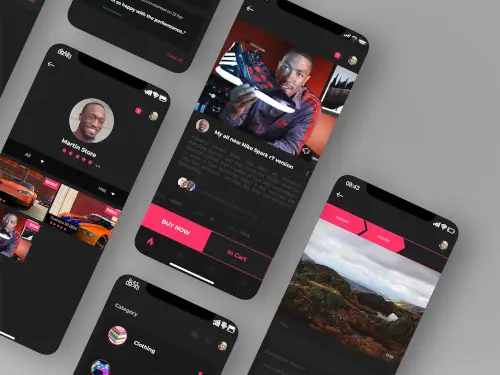
Discover More
App Design.
$100 USD in 1 day.

Discover More
Website.
$430 USD in 1 day.

Discover More
Website Design.
$140 USD in 13 days.

Discover More
App Design.
$200 USD in 19 days.

Discover More
Website.
$150 USD in 13 days.

Discover More
Website.
$240 USD in 1 day.

Discover More
Website.
$100 USD in 1 day.
As featured in


The world's largest marketplace
Millions of users, from small businesses to large enterprises, entrepreneurs to startups, use Freelancer to turn their ideas into reality.
73.1M
73.1M
Registered Users
23.7M
23.7M
Total Jobs Posted
Looking for freelancers for other types of work?
Thanks! We’ve emailed you a link to claim your free credit.
Something went wrong while sending your email. Please try again.



Copy to clipboard failed, please try again after adjusting your permissions.
Copied to clipboard.
Loading preview
Permission granted for Geolocation.
Your login session has expired and you have been logged out. Please log in again.